










Inside ChatGPT Ads: Our First Takeaways
With the emergence of AI-based solutions that alter user behavior in terms of searching, comparing and decision-making processes, the sphere of advertisement faces a new landscape as well. For businesses, however, the issue is no longer the availability of AI-based ads, but rather how they can be developed, tested and tracked.
At Lighthouse, we have already begun building our ChatGPT Ads campaigns, taking advantage of this nascent stage to explore all the features of the platform.
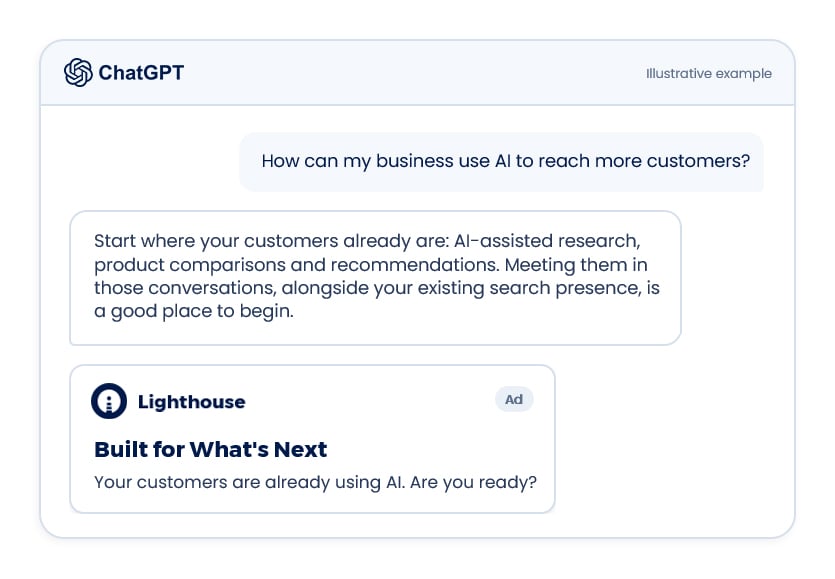
A new environment, not another Search campaign
One of the most important learnings right from the start is that ChatGPT Ads should not be seen as an exact replica of Google Search campaigns.
ChatGPT Ads are not based on keyword matching. Rather, advertisers must deal with context clues, which will help in matching ads with conversational context.
The user is not entering keywords. The user is stating requirements, asking questions, comparing things, making decisions.
This is a very different approach for advertisers when it comes to campaign creation and messaging.
First practical findings
According to the initial setup of our campaigns, ChatGPT Ads have already proven that they have a different planning logic than that of Search campaigns.
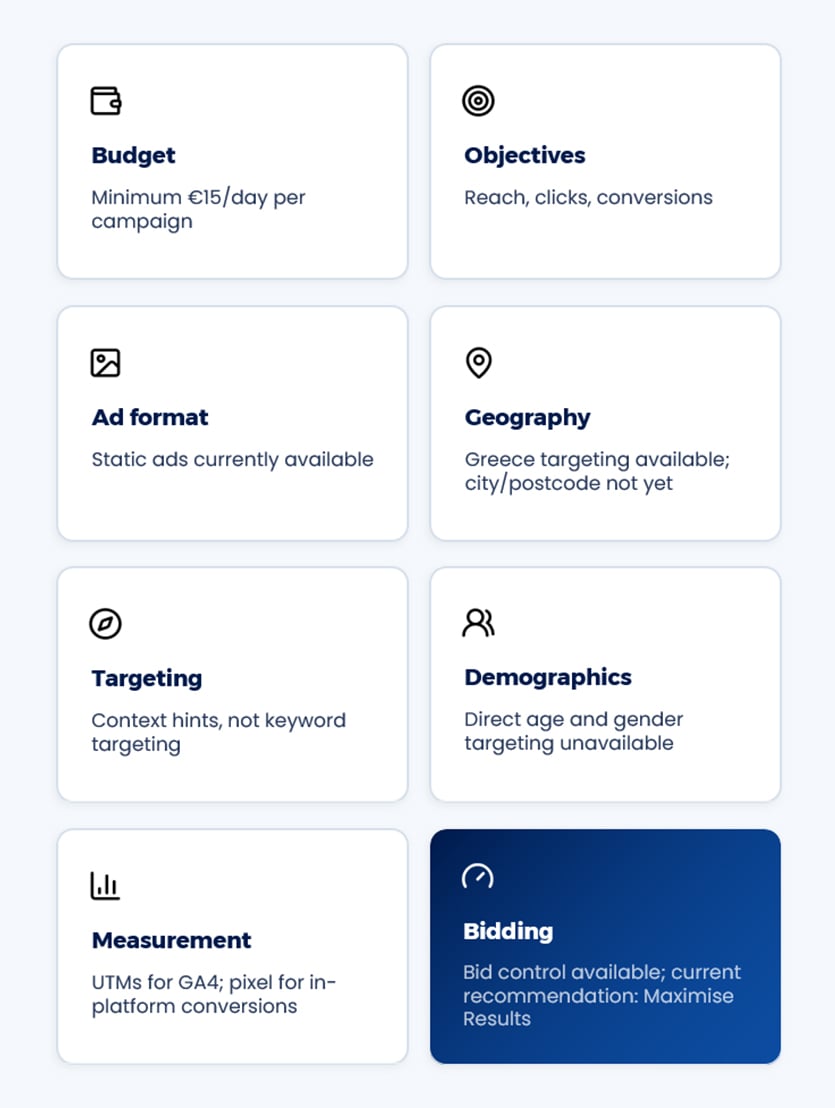
In terms of campaign set up, ChatGPT Ads have already provided an initial framework, which is set by objectives like Reach, Clicks and Conversions, minimum budget of €15/day per campaign and bidding strategies such as Maximise Results.
The major change lies in the targeting. Rather than precise keywords, the platform employs context cues, so that now campaign creation has to consider the needs, questions and decision-making of users more.
The formats, audience targeting and geo targeting continue to develop, while the measurement of performance is already possible using UTMs for GA4 and in-app pixel tracking.
The practical learnings of the first campaigns are highlighted in the graphic below.
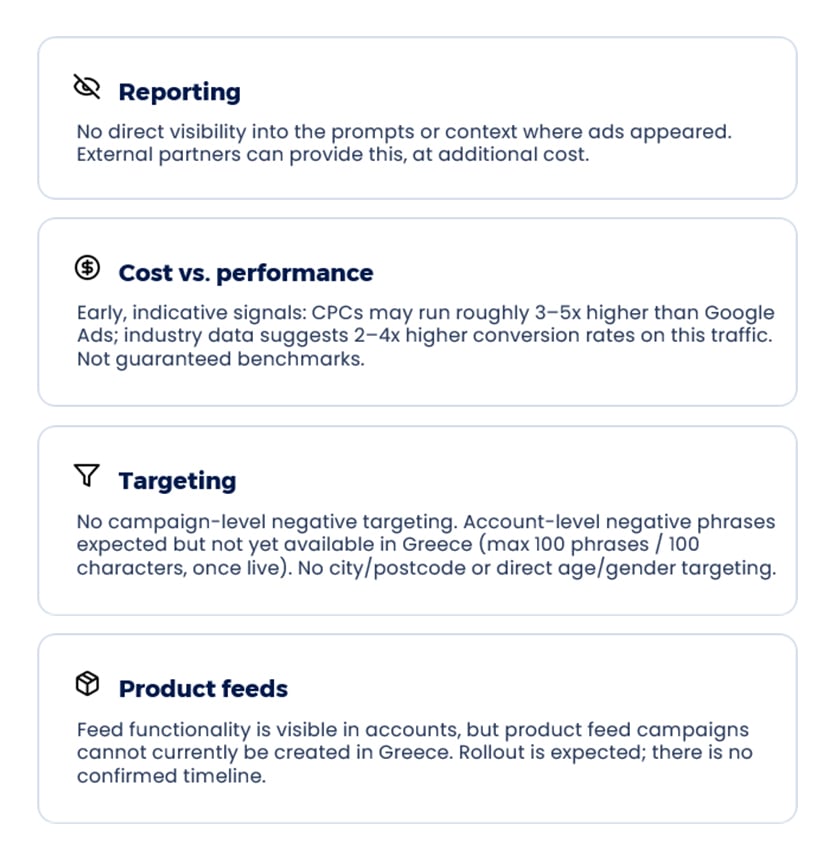
Early cost and performance signals
From an early performance standpoint, CPCs seem to be higher as well in comparison with the usual Google Ads standards, at times even 3-5x higher.
However, CPC can't be assessed alone. According to industry data, ChatGPT Ads can also have higher conversion rates in comparison with regular search, sometimes even 2-4x higher.
It means that one must consider the cost per valuable result, quality of users and channel position within the entire customer journey, instead of being preoccupied with just the cost per click.
What this means for campaign strategy
The deployment of ChatGPT Ads would mean adopting a new strategy altogether.
Rather than simply mirroring the existing Google Search Campaigns and Keywords, one must begin with Search Terms and successful Keyword Themes and then extrapolate them to their conversational meanings.
Instead of asking what keyword the user typed in, the question will be, "What does the user want? Or what problem is the user trying to solve?"
It is at this juncture that the platform becomes quite interesting indeed.
Why early testing matters
ChatGPT Ads are in their early stages, and there is going to be plenty of room for evolution on the platform.
For brands, this is an opportunity for early learning, when the channel is not yet crowded.
The early adoption would allow us to learn how AI-native campaigns operate, how the context cues affect ad delivery, what kind of messaging works better, and how the new channel could complement Search, Paid Social, and other demand-generation activities.
The window of opportunity is open, yet the platform is still young.
Overall takeaway
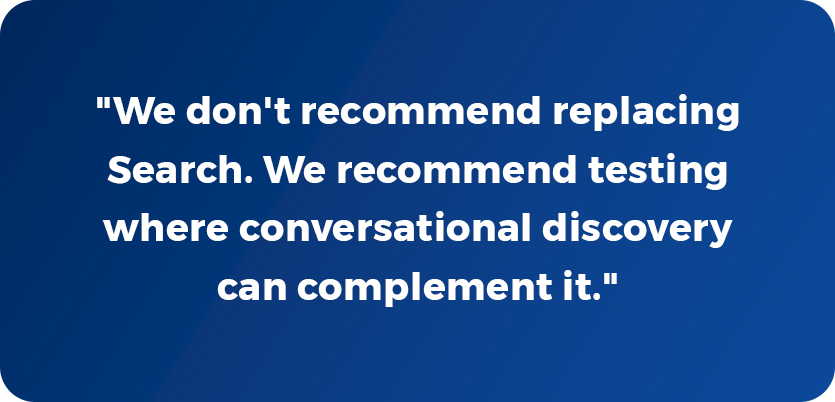
ChatGPT Ads should not be considered an equivalent replacement for other available platforms.
It is an additional element in the current mix of digital media that requires some time to develop. However, the new channel opens up new possibilities for brands to show up at specific high-intent times when users explore, compare, and make decisions. Therefore, it makes sense for brands to begin showing up on the platform as it develops further.
At Lighthouse, we are already experimenting within this emerging ecosystem through campaigns and will share more insights as the platform evolves.
Want to understand how AI-native advertising can fit into your digital strategy?
Get in touch with Lighthouse to learn more.
At Lighthouse, we have already begun building our ChatGPT Ads campaigns, taking advantage of this nascent stage to explore all the features of the platform.
A new environment, not another Search campaign
One of the most important learnings right from the start is that ChatGPT Ads should not be seen as an exact replica of Google Search campaigns.
ChatGPT Ads are not based on keyword matching. Rather, advertisers must deal with context clues, which will help in matching ads with conversational context.
The user is not entering keywords. The user is stating requirements, asking questions, comparing things, making decisions.
This is a very different approach for advertisers when it comes to campaign creation and messaging.
First practical findings
According to the initial setup of our campaigns, ChatGPT Ads have already proven that they have a different planning logic than that of Search campaigns.
In terms of campaign set up, ChatGPT Ads have already provided an initial framework, which is set by objectives like Reach, Clicks and Conversions, minimum budget of €15/day per campaign and bidding strategies such as Maximise Results.
The major change lies in the targeting. Rather than precise keywords, the platform employs context cues, so that now campaign creation has to consider the needs, questions and decision-making of users more.
The formats, audience targeting and geo targeting continue to develop, while the measurement of performance is already possible using UTMs for GA4 and in-app pixel tracking.
The practical learnings of the first campaigns are highlighted in the graphic below.
Early cost and performance signals
From an early performance standpoint, CPCs seem to be higher as well in comparison with the usual Google Ads standards, at times even 3-5x higher.
However, CPC can't be assessed alone. According to industry data, ChatGPT Ads can also have higher conversion rates in comparison with regular search, sometimes even 2-4x higher.
It means that one must consider the cost per valuable result, quality of users and channel position within the entire customer journey, instead of being preoccupied with just the cost per click.
What this means for campaign strategy
The deployment of ChatGPT Ads would mean adopting a new strategy altogether.
Rather than simply mirroring the existing Google Search Campaigns and Keywords, one must begin with Search Terms and successful Keyword Themes and then extrapolate them to their conversational meanings.
Instead of asking what keyword the user typed in, the question will be, "What does the user want? Or what problem is the user trying to solve?"
It is at this juncture that the platform becomes quite interesting indeed.
Why early testing matters
ChatGPT Ads are in their early stages, and there is going to be plenty of room for evolution on the platform.
For brands, this is an opportunity for early learning, when the channel is not yet crowded.
The early adoption would allow us to learn how AI-native campaigns operate, how the context cues affect ad delivery, what kind of messaging works better, and how the new channel could complement Search, Paid Social, and other demand-generation activities.
The window of opportunity is open, yet the platform is still young.
Overall takeaway
ChatGPT Ads should not be considered an equivalent replacement for other available platforms.
It is an additional element in the current mix of digital media that requires some time to develop. However, the new channel opens up new possibilities for brands to show up at specific high-intent times when users explore, compare, and make decisions. Therefore, it makes sense for brands to begin showing up on the platform as it develops further.
At Lighthouse, we are already experimenting within this emerging ecosystem through campaigns and will share more insights as the platform evolves.
Want to understand how AI-native advertising can fit into your digital strategy?
Get in touch with Lighthouse to learn more.


